


The Complete Guide to Starting at the Gym — What to Do, What to Expect and How to Actually Stick With It

Walking into a gym for the first time or returning after years away, is one of the most courageous things a person can do.
Nobody around you knows what it took to get through that door.
They don't know about the conversation you had with your doctor, the health scare that finally moved the needle, the years of telling yourself you'd start when the timing was better.
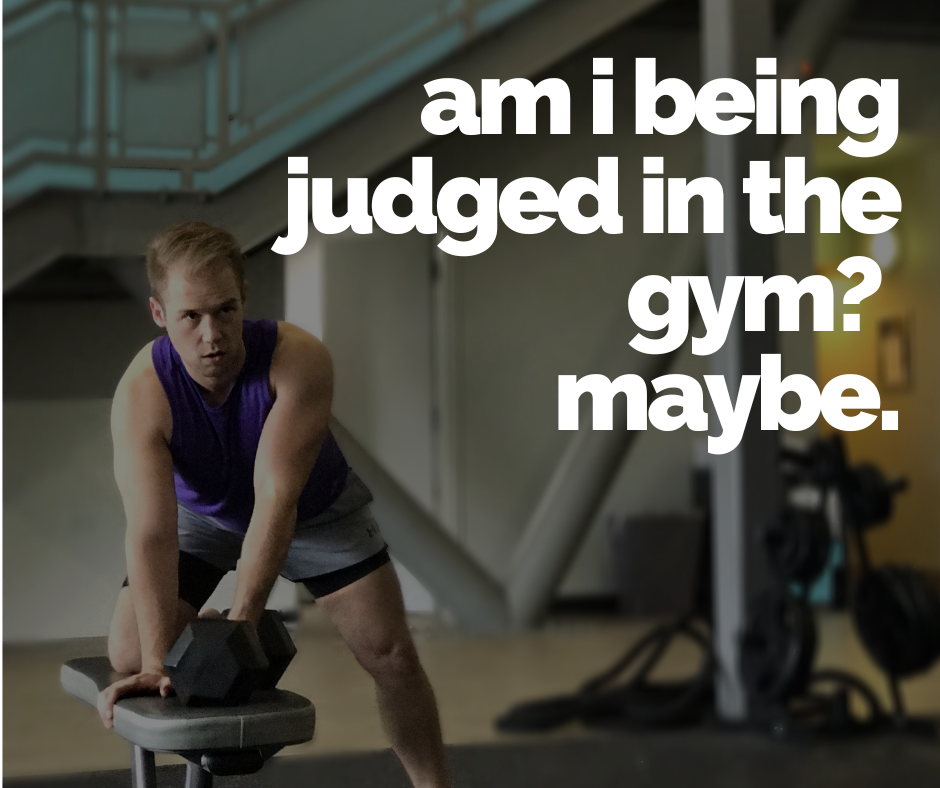
They just see someone on a treadmill or standing near the free weights looking slightly unsure of where to begin.
I've been training people in Edmonton for over 15 years and sat across people at that exact moment.
And I've noticed that the ones who build something lasting aren't necessarily the most motivated on day one. They're the ones who go in with realistic expectations, a simple starting point and the patience to let the process work.
This guide is what I wish those people had before their first session.
Before anything else: you don't need the perfect plan
The single biggest thing that stops people from starting isn't laziness. It's the paralysis of trying to figure out the optimal approach before taking a single step.
What equipment should I use?
How many days a week?
What should I eat?
Should I do cardio first or weights?
Do I need a program?
Here's what I tell every new client: You need one decision, one workout and one rep. The rest gets figured out as you go. A 30-minute session you actually complete is worth ten perfectly designed programs you never start.
Start smaller than you think you should. I've had clients begin with a single 30-minute session per week. Within a few months they were training three times a week and moving better than they had in years. The small start makes everything else possible.
What to focus on in your first month
There are three things that matter above everything else when you're getting started.
Not how much weight you're lifting. Not how long you're at the gym. These three things:
Movement quality first.
Before you worry about load, speed or intensity, learn how the movements feel. A squat, a hinge, a press, a row — these are the fundamental patterns your body will use for the rest of your training.
Getting them right from the beginning protects your joints, prevents injury and makes every session more effective. Getting them wrong compounds over time in ways that are painful and expensive to fix.
For adults over 50, this is especially important. Many people arrive with decades of movement habits, some good, most not and bodies that have adapted around old injuries or surgeries. Taking the time to understand how your specific body moves is not a detour from progress. It is the progress.
Progressive challenge.
Once your form is solid, you need to be challenged. Choose a weight where you can complete every rep with good technique, but the last two or three reps of each set are genuinely difficult.
If every rep feels easy, go heavier. If you can't complete the set with good form, go lighter. That zone of appropriate challenge — not comfortable, not overwhelming, is where adaptation happens.
Over time, what was once challenging becomes manageable. When that happens, increase the load slightly.
This is progressive overload, and it's the mechanism behind every meaningful physical improvement you'll make. The body adapts to stress. Give it slightly more stress, consistently, over time. That's the whole system.
Consistency over intensity.
A moderate workout you repeat every week for six months will produce more results than an intense workout you do twice and abandon. This is the part most people get intellectually but struggle to apply emotionally, because intensity feels like effort and effort feels like progress — even when it's just fatigue.
The goal of your first month is not transformation. It is showing up often enough that the gym stops feeling foreign and starts feeling like yours.
Set goals that actually mean something.
"I want to get in shape" is not a goal. It's a direction. Goals need enough specificity to tell you whether you're moving toward them.
A useful goal has three layers;
The outcome — what you want to achieve (lose 15 pounds, deadlift your bodyweight, hike the river valley without stopping).
The performance marker — a measurable indicator of progress along the way (squat to a chair with control, complete three workouts per week, walk 30 minutes without joint pain).
And the consistency target — the minimum commitment that makes the outcome possible (train twice a week for eight weeks, track one meal per day, sleep seven hours a night).
When you define your goals this way, you have a map instead of a wish. And when you have a map, a missed workout is a detour — not a failure.
Expect frustration. It's part of the process.
Nobody tells you this clearly enough, so I will:
The beginning is hard, and not just physically. There will be sessions where nothing feels right. Weeks where the progress feels invisible. Moments where you wonder whether this is actually working.
That frustration is not a sign something is wrong. It's a sign you're in it.
Every person I've trained over 15 years has moved through a version of that valley and every single one of them who stayed in it came out the other side surprised by what they were capable of.
Confidence doesn't come before you start. It comes after.
Each session is evidence — small, accumulating proof that you can do this. You don't feel it yet because the evidence is still thin.
Give it time.
A practical note on getting started in Edmonton
If you're joining a public gym in Edmonton for the first time, a few sessions with a trainer — even just two or three, will save you months of confusion and significantly reduce your injury risk.
You don't need to commit to long-term training to benefit from a proper introduction to the environment, the equipment, and the movements that are appropriate for your body and your goals.
If you're already working with a trainer or considering it, the consultation is where everything starts. Not with a fitness test or an aggressive program with a conversation about where you are, where you want to go and what's gotten in the way before.


Comments